
Woodward Projected Versus Actual Release
ODOC uses the full label “PROJECTED RELEASE DATE,” while Oklahoma Pardon and Parole Board documents abbreviate it as PRD. It estimates a sentence release after credits and sentence administration. The parole eligibility date, shown as PE DATE in Board records, marks when consideration may become available. Neither field is an actual discharge event.
A pretrial Woodward County Jail detainee has no computed sentence end. A bond, dismissal, or release order may authorize departure, but processing and detainer checks can remain. For a sentenced person, the judgment supplies the term and custody credit while the responsible jail or ODOC applies the governing rules.
Find a Woodward Projected Release Date
Classify the custody first. The public ODOC offender page does not promise an exact release date for every person. ODOC says the date is confidential absent a qualifying need and calls it tentative because credit class, misconduct, and achievement credits can change. PPB public dockets and results may show PRD, but a listed date remains an estimate.
- Gather the full name, date of birth, DOC or booking number, court case, and last known custodian.
- For a state prisoner, search the ODOC Offender Lookup by DOC number when possible.
- Compare the record with date of birth, county, case, offense, and custody clues.
- Check PPB dockets and results for PE DATE and PRD, while keeping parole eligibility separate from sentence release.
- For a county sentence, obtain the judgment and custody-credit entries from the court, then ask the jail records unit for its calculation and actual discharge.
- After the event, request the movement or discharge record. Do not use the prior estimate as proof.
The Woodward County release-record guide explains how to request the jail register entry and reconcile it with a court order.
Oklahoma Credits in Woodward Release Dates
Under 57 O.S. §138, one ODOC earned credit equals one day. Monthly rates depend on class and offense history. For people within the subsection-E listed felony history, Classes 1 through 4 earn 0, 22, 33, and 44 credits. For those never convicted of a listed felony, the rates are 0, 22, 45, and 60. Credits may be lost or restored, achievement credits may apply, and life sentences receive no deduction.
Those figures do not create a safe public calculator. The count of conviction, offense date, concurrent or consecutive terms, jail-time credit, restrictions, misconduct, and later corrections can change the computation. ODOC’s worksheet projects several future points under class and security assumptions, which makes it a planning tool rather than an individualized public certificate.
Note: Ask the facility records officer or case manager for an individualized computation instead of applying a generic credit formula.
Why Woodward Release Dates Change
A projected date changes when an input changes or an earlier record is corrected. Some changes affect sentence time. Others affect whether the person can leave to the community on the date shown.
| Factor | Possible effect |
|---|---|
| Earned-credit class | Promotion or demotion changes future monthly credits |
| Misconduct | Credits may be lost, then possibly restored |
| Achievement credit | Qualified achievements can change the projection |
| Sentence documents | Amended terms, jail credit, or appellate action can require recalculation |
| Consecutive cases | One term may follow another rather than run at the same time |
| Detainer or hold | The person may transfer to another custodian instead of entering the community |
| Parole action | A grant, denial, pass, or condition changes the pathway, not necessarily the sentence end |
| Data correction | A verified error can alter the displayed or internal result |
Read PPB result words literally. “Parole To Street” can still carry prerequisites. “Parole To Detainer or Void” anticipates another hold. A favorable vote is not the moment physical release occurred.
Confirm Woodward County Actual Release
For Woodward County Jail, call 580-256-3264 ext. 2 and distinguish “present,” “released,” and “transferred.” Ask for the release date and manner, or the receiving agency for a transfer. The court docket can show the legal authority, yet it may not show the minute jail processing ended.
For ODOC, use the stable DOC number, then seek a movement or discharge record from Legal Services or Closed Records. Inactive records are digitized and maintained indefinitely under OP-060212. OK VINE can add a prospective alert, but it remains a notification layer. The Woodward County VINELink check explains registration and the PIN process.
Woodward County Jail Good Time
County-jail computation follows a separate rule. Section 57-65 provides five days of credit for each four days served for eligible convicted prisoners whose conduct under sheriff rules is satisfactory. Section 57-58.3 addresses a different work-program credit in covered cases. Neither rule applies as a blanket reduction to every Woodward booking, especially pretrial detention.
A local OSCN case shows why source records matter. In Woodward CF-2017-00046, the docket recorded a 150-day sentence, a sheriff return with 133 days served, 17 good-time days, zero work-time days, and “D RELEASED.” It is a worked local example, not a formula. Later warrants and a revocation application in the same case also show why an old release does not establish present status.
Ask the jail and court to state days imposed, presentence credit, statutory good time used, work credit, forfeitures, and the actual discharge date. Woodward publishes no local release calculator or written counting convention.
Woodward Sentences and the 85 Percent Rule
21 O.S. §13.1 lists specific offenses for which at least 85 percent of imprisonment must be served before parole consideration and credits cannot reduce service below that floor. The rule attaches to the enumerated conviction and applicable law, not to a broad news label such as “violent felony.” Confirm the exact count and the statute in effect on the offense date.
Parole eligibility under §57-332.7 is a separate calculation. Its rules vary with offense, date, sentence structure, and exclusions. Eligibility only permits consideration. It neither guarantees a favorable Board decision nor confirms release. That is why PE DATE, PRD, Board action, and the later discharge event must remain four distinct fields.
Woodward ODOC Date Source Limits
The official ODOC offender information page explains that a projected date is tentative and subject to changing credit inputs.
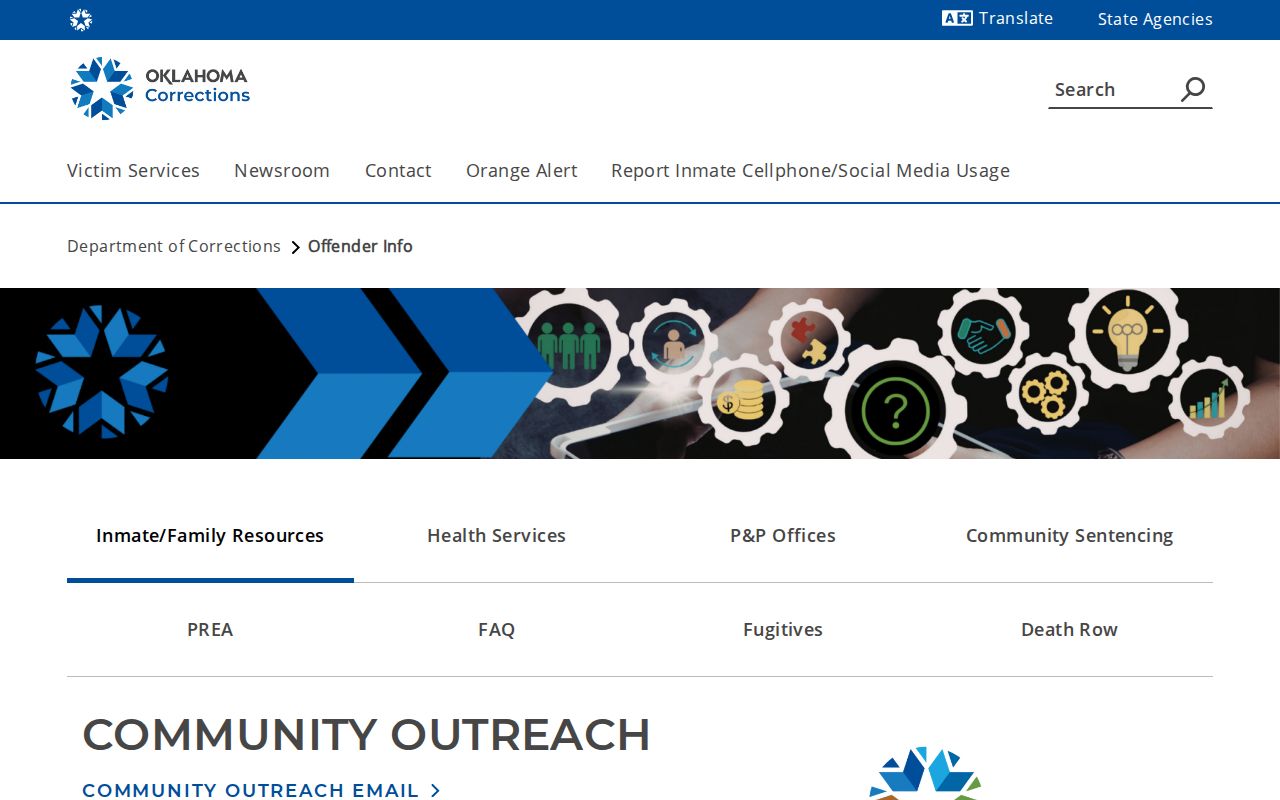
This official warning prevents a common error: assuming that the public offender detail must display a final date. If the public page is abbreviated, use PPB material for its public PRD field and ask ODOC or the facility for any releasable individualized record.
Woodward PRD and Parole Sequence
The PPB archive is organized by year and month, with dockets and later results. A docket is prospective. It identifies people expected for consideration and can list PE DATE, PRD, sentence, offense, and case details. A result records Board action after votes are finalized and validated. The processed timestamp may follow the hearing date.
Neither document certifies a gate release. A denial means no grant from that action. A pass means later consideration. “Parole To Street” is favorable but can carry prerequisites, while “Parole To Detainer or Void” signals that another hold may control. After the result, check ODOC, VINE, and the facility’s later record. This order keeps a hearing date, Board vote, projected date, and physical discharge from being collapsed into one event.
Request Woodward Release Computation Records
For ODOC, include the DOC number, full name, date of birth, custody period, county case numbers, and the precise record sought. Ask for a releasable sentence computation, movement history, discharge type and date, or supervision closing status. Closed Records is available at 405-425-2691, while ODOC Legal Services lists osordischarges@doc.ok.gov for discharge questions.
For a county sentence, ask the Woodward jail or court for the judgment term, presentence credit, jail good time actually awarded, forfeitures, work credit if any, and the resulting discharge entry. If a record is denied or redacted, ask for the statutory basis and whether public portions can be separated. A request for the agency’s existing computation is more precise than asking staff to predict a date from incomplete facts.
Use the authorization form when protected ODOC detail is sought with the subject’s consent. It asks for the offender’s name, date of birth, DOC number, recipient, contact details, purpose, signature, and scope. Consent should not be described as mandatory for all public records, but it can help when a fuller computation cannot otherwise be released to a third person.
Keep sentence completion distinct from supervision discharge. A parolee may have left prison while the original sentence and supervision terms continue. A probationer may never have served a prison sentence. When the question is about the end of parole or probation, ask for the supervision closing record rather than the prison PRD.
Likewise, a county transfer to ODOC is not community release. The Woodward jail entry should name the receiving agency, and the state record begins the next custody layer. A detainer can produce the same result on an expected date: custody at one place ends, but another sovereign takes control.
When sources conflict, preserve both dates and ask each custodian what its field measures. A court order date may mark authorization, a PPB result date marks a decision, PRD is an estimate, and the jail or ODOC discharge time marks the physical event. Forcing them into a single date erases useful facts.
Dates can also be correct at different stages. A calculation may be accurate when prepared and later change because of a new judgment, restored credit, misconduct, or detainer. Note when each record was produced. Then seek the newest computation and, after custody ends, the actual discharge record. That method explains a changed Woodward date without assuming either source was false.
Do not calculate an 85 percent floor from the total term unless the exact conviction is on the statutory list and the applicable version of the law has been checked. Nor should a one-third or one-quarter parole rule be mistaken for discharge. Parole eligibility rules and earned-credit rules answer different parts of sentence administration. The judgment, offense date, and current statute must be read together.
For a person with several cases, obtain the sentence structure. Concurrent terms run together as ordered, while consecutive terms can extend the aggregate end. A public docket caption may not show how ODOC has linked every term. Ask for the current aggregate computation rather than adding dates from separate cases by hand.