
Northwest Juvenile Release Privacy
Northwest Oklahoma Juvenile Detention Center is part of Woodward County's facility map, but it sits outside the adult release-record system. The Oklahoma Office of Juvenile Affairs explains that juvenile records are confidential except when access is allowed by law or court order. An adult jail roster, county booking request, ODOC adult offender search, or general search box is not a lawful substitute for the authorized juvenile route.
That boundary protects the child and the integrity of the proceeding. A public page should not solicit a juvenile's name, publish custody or release claims, or promise a public result. Even an apparent no-match proves nothing. The child may be in a protected placement, moved within the juvenile system, returned to a guardian, or subject to a court plan that cannot be disclosed to the public.
The question for facility staff should be framed around authority. A parent or guardian may need to verify identity and legal status. Counsel should use formal representation and case information. A case manager or agency should use its approved channel. Other callers may receive no confirmation, and that refusal must not be treated as evidence of detention or release.
Northwest Juvenile Facility Details
The official Juvenile System Oversight facility list identifies the Woodward center, its telephone number, and its service for boys and girls ages 12 through 18:
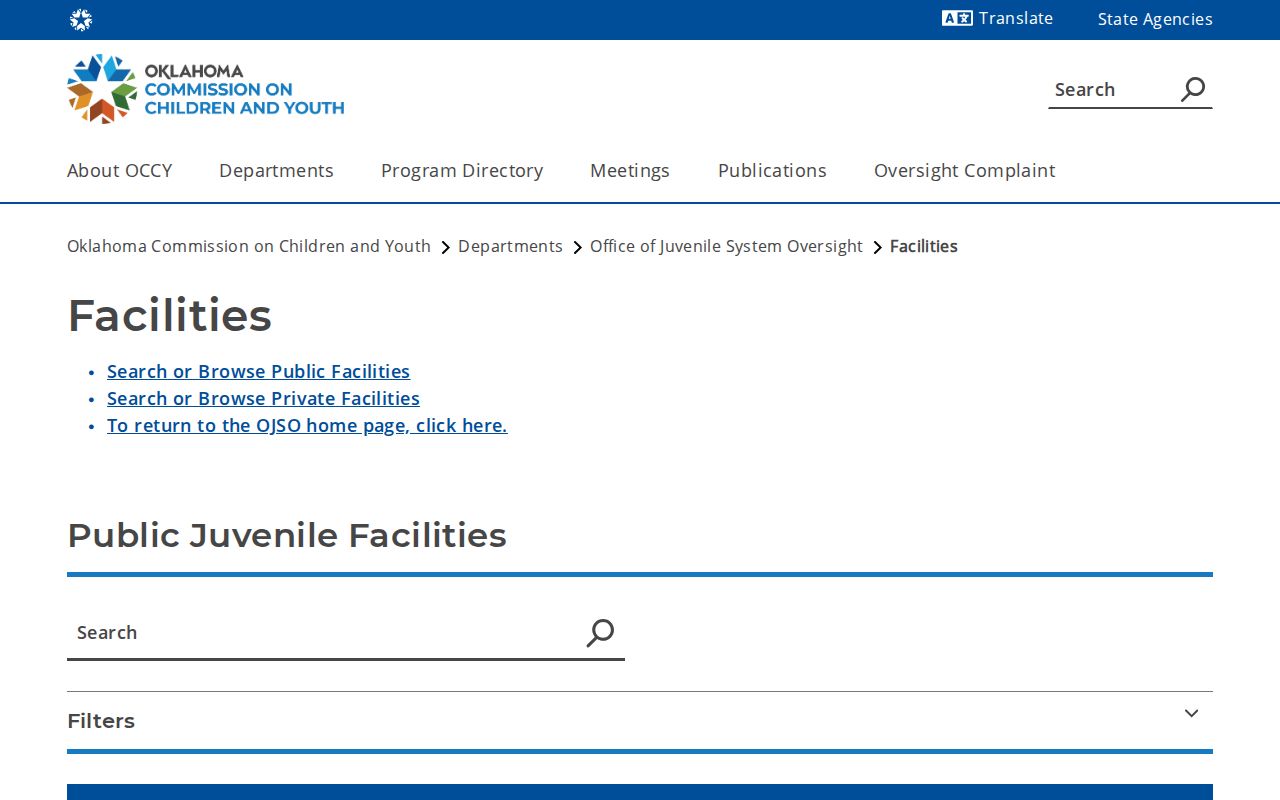
The listing confirms that this is a juvenile detention facility, not a wing of the adult Woodward County Jail. It does not create a public roster, a recent-release feed, or permission to obtain an individual child's record.
State planning documents add regional context. An OJA plan from 2019 allocated eight contracted Woodward beds. Later material described ten licensed beds, eight contracted beds, and regional overflow arrangements. Those figures describe planning and capacity at the time of the documents. They are not current population counts and must not be used to infer whether any child was present or released.
Regional overflow also means geography alone may not disclose the placing county or final destination. The case order and assigned personnel control. Historical planning figures cannot replace direct, authorized confirmation.
Northwest Juvenile Release Contact
The official state listing supplies a direct facility telephone. The research did not establish a public release desk, public records email, public roster, or public hours for individual status inquiries. Callers should ask for the correct authorized contact and avoid assuming that front-line staff can disclose confidential information.
Northwest Oklahoma Juvenile Detention CenterWoodward, Oklahoma
Telephone: 580-808-3662
Juvenile detention for boys and girls ages 12–18
Individual records: authorized channels only
The Oklahoma Office of Juvenile Affairs information explains the confidentiality boundary. A parent or guardian should ask what identification and legal documentation are needed. An attorney should provide representation details. If facility staff direct the caller to juvenile court or an assigned case manager, that referral is part of the correct process rather than a failed search.
Emergency concerns should follow the directions of the responsible agency or counsel. General public-record rules for adult jail registers cannot simply be copied into a juvenile request. Confidential and sealed information remains protected, and staff may disclose only what the caller is entitled to receive.
Adult and Juvenile Release Records
Woodward County Jail and Northwest Oklahoma Juvenile Detention Center use different record systems. The adult county jail's discharge record may be available under the Oklahoma Open Records Act, subject to redaction and other limits. Juvenile detention records are generally confidential and require statutory, court-ordered, or role-based access. The adult ODOC lookup likewise covers the state corrections population, not a child's juvenile detention stay.
| Question | Adult county path | Juvenile path |
|---|---|---|
| Is the person held? | County jail phone and register | Authorized facility or case contact |
| Why was custody ordered? | District or Municipal Court | Juvenile court through permitted access |
| Where did the person go? | Discharge manner and receiving agency | Case team, court, or authorized placement record |
| Is there a public roster? | No official Woodward adult roster found | No public juvenile lookup route |
Terms also differ. “Placement” can refer to a court or agency decision about where a child receives care or supervision. “Detention” is secure custody pending juvenile process. Neither should be restated as an adult conviction or prison sentence. The child's court and case team determine the proper language.
Northwest Juvenile Release Planning
Release planning may involve a guardian, case manager, counsel, court, transport provider, school contact, treatment provider, or another authorized placement. The research does not document the center's pickup site, release hours, required identification, property procedure, or transport policy. Those points must be confirmed by an authorized person before travel.
Ask concrete questions through the secure channel. Has the court or responsible agency approved the movement? Who may pick up the child? What identification or paperwork is required? Is the child returning home, transferring, or moving to another placement? Are there reporting, supervision, treatment, or court instructions? Staff may not be able to answer every question for every caller.
A delay after an order does not by itself show unlawful custody. Safety checks, receiving-placement confirmation, transport, and notices can separate a legal decision from physical departure. The person with authority should document the official who gave instructions, the time of contact, and any written direction, while keeping the child's information private.
Missing Northwest Juvenile Records
A missing online result is expected, not suspicious. Search engines may surface old facility lists, plans, news, or unofficial directory entries, none of which confirms a child's identity or present status. The official facility list proves the center's existence and service scope. It does not prove that a named child is or was detained there.
If the authorized route does not find the child, recheck the placing county, legal name, date of birth, court number, and assigned worker. Regional overflow may involve another site. Do not broaden the search by publishing identifying information. Counsel or the responsible juvenile agency can determine whether a court motion, records authorization, or another formal step is needed.
The broader Woodward County release-record framework helps distinguish custody systems, but its adult search channels do not override juvenile confidentiality. The safest conclusion is narrow: public tools cannot confirm the juvenile event. Only an authorized source can do so.
Authorized parties should also separate a temporary move from final release. Regional placement can change for capacity, safety, treatment, court, or transport reasons, and the public planning documents do not reveal an individual reason. Ask the case team which entity retains legal responsibility, which order controls, and whether a new placement or return home has actually occurred. Preserve written instructions privately. If a public directory conflicts with the assigned official, follow the case-specific source and report the stale listing to its publisher without disclosing the child's identity.